The mat vs reformer Pilates question comes up in almost every conversation I have with women who are new to Pilates. Reformer studios are everywhere, the classes look polished on social media, and it is easy to assume the machine must be better. But better for what, and better for whom?
In this guide I will explain what actually separates the two, which one tends to be harder, what the evidence says about results, and how to choose based on your goals, budget and lifestyle. I teach mat Pilates, so I will be upfront about that bias and give you the honest pros and cons of both.
Both build core strength, posture and flexibility. Reformer Pilates uses a sliding carriage and springs that can assist or resist you, and it needs a studio. Mat Pilates uses your body weight and gravity, costs far less and can be done anywhere. There is no evidence that one format produces better results. The one you can do consistently, two to three times a week, will work best.
What Is Mat Pilates?
Mat Pilates is a series of exercises performed on the floor, using gravity and your own body weight for resistance. According to the Better Health Channel, its main aim is to condition the deeper supporting muscles of your body to improve posture, balance and coordination. It is the original form of Pilates and the one you can do in your lounge room. I cover it in depth in my guide to Pilates for beginners at home.
What Is Reformer Pilates?
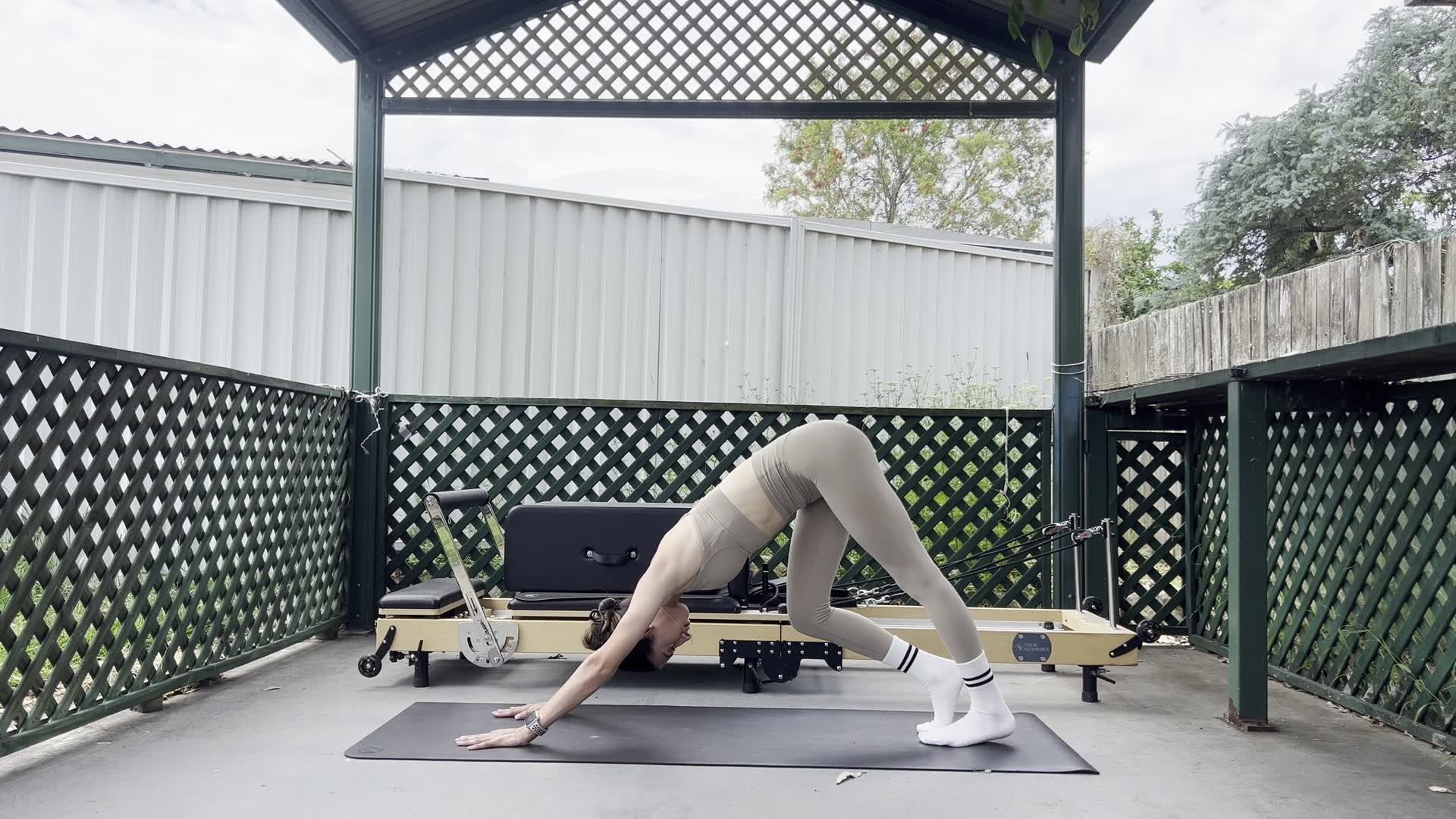
Reformer Pilates is the best known type of equipment based Pilates. The reformer is a machine with a moveable carriage that you push and pull along its tracks against spring loaded resistance. Changing the springs makes exercises lighter or heavier, and straps, a footbar and a headrest let you work in many positions.
Harvard Health describes it as a specially designed piece of equipment that provides resistance, available in many fitness facilities. Because of the cost and size of the machines, reformer Pilates is almost always done in a studio. Harvard Health ↗
Mat vs Reformer Pilates at a Glance
| Mat Pilates | Reformer Pilates | |
|---|---|---|
| Resistance | Body weight and gravity | Adjustable springs |
| Support | None, your muscles do all the stabilising | Carriage and springs can assist you |
| Where | Anywhere with a mat | Studio, booked in advance |
| Cost | Low, online memberships cost less than most studio packs | Higher, usually paid per class or pack |
| Learning curve | Simple setup, harder to master control | Machine takes time to learn safely |
| Core challenge | Very high, nothing helps you | High, varies with spring settings |
| Best for | Consistency, convenience, budget | Variety, hands on coaching, rehab settings |
7 Key Differences Between Mat and Reformer Pilates
- 1. How resistance worksOn the reformer, springs add load you can dial up or down. On the mat, your body weight is the load, and leverage (how long your limbs are) makes moves harder or easier.
- 2. How much help you getSprings can assist movement as well as resist it, which makes some exercises more accessible. On the mat nothing assists you, so your stabilising muscles do every bit of the work.
- 3. DifficultyReformer looks harder, but many people are surprised how challenging a slow mat class is. The difficulty is different rather than higher or lower.
- 4. CostReformer classes are usually paid per class or in packs, which adds up quickly at two or three sessions a week. Mat Pilates at home costs a fraction of that. Compare against our membership pricing.
- 5. ConvenienceReformer means booking, travelling, parking and fitting the timetable. Mat means unrolling it when you have twenty minutes, at 6am or 9pm.
- 6. GuidanceStudio classes give you an instructor in the room, which helps with form. Online mat classes rely on clear cues, so choose an instructor who explains alignment well.
- 7. ConsistencyThis is the one that decides your results. Whatever you can repeat every week will beat whatever you do occasionally. For most busy women, that is the option with the least friction.
Is Reformer Pilates Better Than Mat?
Not in any way the evidence can show. Research on Pilates usually groups mat and equipment work together, and there is no clear proof that one format produces better results for everyday women. A Cochrane review on Pilates for low back pain found it was more effective than minimal intervention, yet not clearly better than other forms of exercise. The takeaway is that doing a well structured program regularly matters more than the specific equipment.
The Better Health Channel recommends Pilates at least two to three times a week for maximum benefit, noting many people see postural improvements after 10 to 20 sessions. Ask yourself honestly which format you could actually do that often, every week, for months.
"The best Pilates is not the one with the fanciest equipment. It is the one you will still be doing in six months."
Which Is Harder, Mat or Reformer Pilates?
It depends on the exercise and the spring setting. Reformer springs can make some moves harder by adding load, and others easier by assisting you. On the mat, nothing helps you lift your legs, roll up your spine or hold a side plank, so your core works constantly to control every movement.
That is why many instructors consider mat work the purest test of control. If you are wondering whether that kind of work actually builds strength, read does Pilates build muscle or just tone.
How to Choose Between Mat and Reformer Pilates
Choose mat Pilates if you
Choose reformer Pilates if you
If you are also weighing Pilates against a gym membership, Pilates versus the gym walks through that decision honestly.
Can You Do Both?
Absolutely, and many women do. A common pattern is mat at home during the week with an occasional studio class for variety. Here is how that can look.
- MondayMat Pilates, core focus (20 min)
- TuesdayWalk or rest
- WednesdayMat Pilates, full body (30 min)
- ThursdayRest or gentle stretch
- FridayMat Pilates, glutes and legs (20 min)
- SaturdayOptional reformer class or long walk
- SundayRest and recover
Not sure how many sessions your body can handle? Can you do Pilates every day has the full answer.
How to Make Mat Pilates More Challenging
One worry I hear is that mat work will get too easy without springs to add. It will not. These are the ways you progress on the mat.
- Slow the tempoTake three seconds to lower in every move. Time under control is where strength builds.
- Lengthen your leversStraighter legs and longer arms move the load further from your centre and make your core work harder.
- Go single sidedSingle leg bridges and side planks double the demand on each side and expose imbalances.
- Add pausesHold the hardest point of each movement for a full breath before continuing.
If you feel you have plateaued, not seeing results from Pilates covers what to change.
I have nothing against the reformer. It is a wonderful machine. But I built this membership around the mat because so many women told me the studio simply did not fit their lives. If you can only get to a studio once a fortnight, three mat sessions at home every week will almost always do more for you.
The Bottom Line
In the mat vs reformer Pilates debate, there is no universal winner. Reformer gives you adjustable resistance and a studio experience. Mat gives you convenience, affordability and some of the toughest core work there is. Choose the one you can repeat two to three times a week, and you will get the benefits of Pilates either way.
The 7 day free trial inside the membership gives you 90+ mat Pilates classes from 10 to 45 minutes, weekly schedules and the recipe library. Browse the class library. No reformer, no credit card, no lock in.
Mat vs Reformer Pilates FAQs
Is mat Pilates as good as reformer Pilates?
Is reformer Pilates better for weight loss?
Can beginners start on the reformer?
Is mat Pilates harder than reformer?
Can I do reformer exercises at home without a machine?
How often should I do mat or reformer Pilates?
Sources and Further Reading
- Better Health Channel, Victorian Department of Health, Pilates health benefits
- Harvard Health Publishing, Pilates: a good option for older adults?
- Cochrane, Pilates for low back pain
- Australian Government Department of Health, movement recommendations for adults 18 to 64 years