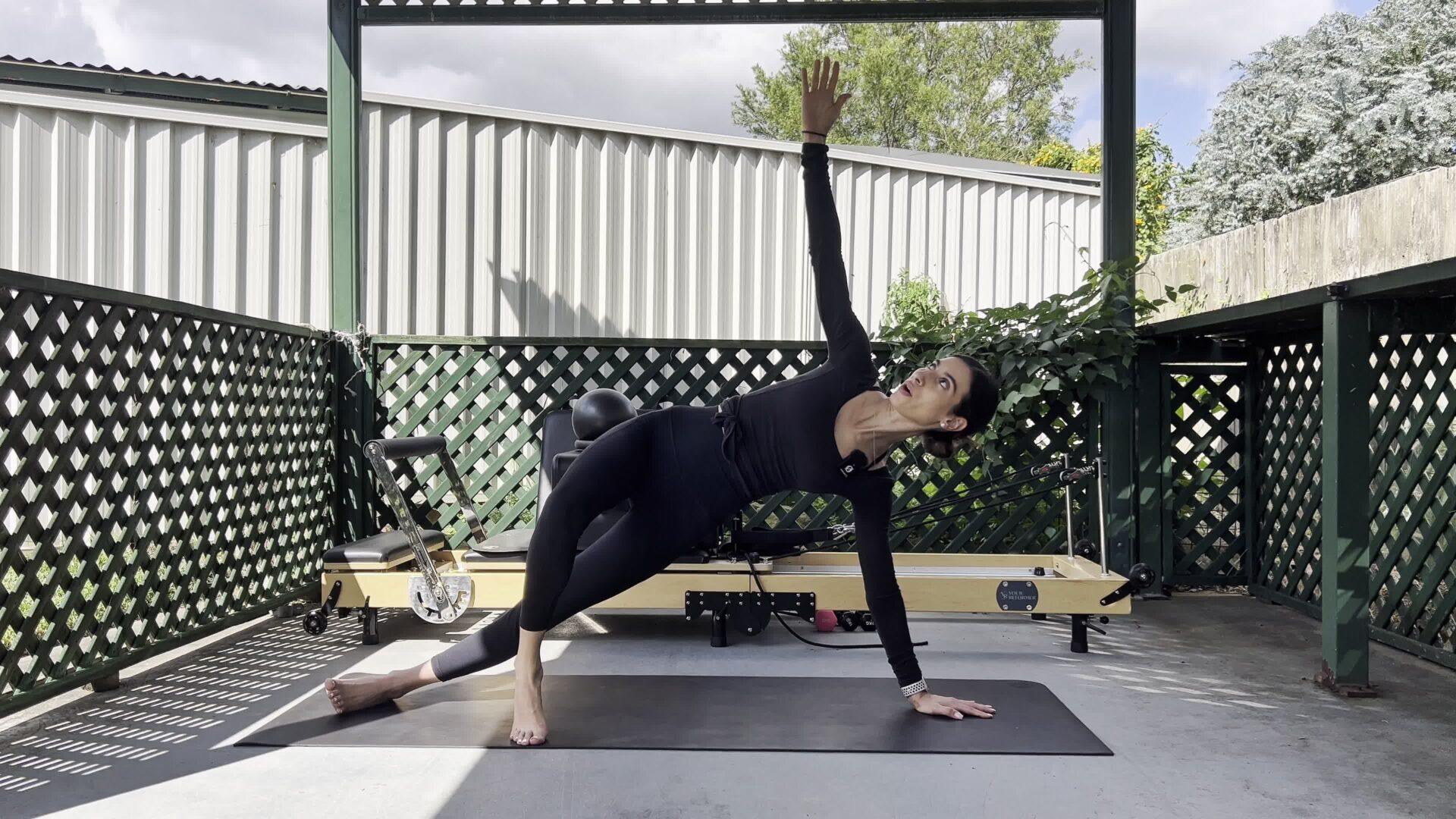
Mat Pilates is where Pilates began, and for most women it is still the smartest place to start. There is no machine to learn, no studio to drive to and nothing to buy except a mat. Yet a well taught session can leave your core shaking in a way a gym class rarely does.
In this guide I will explain what mat Pilates actually is, the principles that make it work, the benefits backed by evidence, five foundational moves to learn first and how often to practise. Whether you have never done a class or you are coming back after years away, this is the starting point I wish I had been given.
Mat Pilates is Pilates done on the floor, using your own body weight and gravity as resistance. It strengthens the deep core muscles and improves posture, flexibility and balance, while staying gentle on your joints. Practised two to three times a week, many people notice postural changes within 10 to 20 sessions. All you need is a mat and a little floor space.
What Is Mat Pilates?
Pilates was developed by physical trainer Joseph Pilates, who introduced it in the 1920s as a way to help injured athletes and dancers return to exercise safely. Since then it has been adapted for everyone, from complete beginners to elite athletes.
The Better Health Channel describes two basic forms. Mat based Pilates is a series of exercises performed on the floor using gravity and your own body weight for resistance, with the aim of conditioning the deeper supporting muscles to improve posture, balance and coordination. Equipment based Pilates uses spring loaded machines such as the reformer. If you are weighing up the two, I compare them properly in the reformer section below. Better Health Channel ↗
How Mat Pilates Works: The Six Principles
What separates mat Pilates from simply doing exercises on the floor is how you do them. Every movement is guided by a handful of principles that most instructors still teach today.
Better Health notes that each Pilates exercise has a prescribed placement, rhythm and breathing pattern, and that the quality of each movement matters more than how many repetitions you do. That is why a slow mat class can be surprisingly hard.
"In mat Pilates there is nowhere to hide. No springs help you up, no machine holds you steady. It is just you and your control."
Mat Pilates Benefits
These are the changes women in our community notice most, and they line up closely with the benefits listed by Victoria's Department of Health.
What about back pain?
Back pain is one of the most common reasons women start Pilates. A Cochrane review of randomised trials found low to moderate quality evidence that Pilates reduces pain and disability compared with minimal intervention. It did not find Pilates was clearly better than other types of exercise, so the best choice is the one you enjoy enough to keep doing. If your back pain is new, severe or getting worse, see your GP first.
Is Mat Pilates Harder Than It Looks?
Often, yes. Better Health points out that in Pilates your muscles are rarely worked to exhaustion, but the work demands intense concentration. On the mat there are no springs to assist you, so your own muscles control every centimetre of movement.
That control builds real, functional strength. If you have been told mat work only tones, I answer that properly in does Pilates build muscle or just tone. And if you are deciding between mat classes and lifting weights, Pilates versus the gym covers that honestly.
What You Need to Start Mat Pilates at Home
- A mat with some cushioningA slightly thicker mat protects your spine and knees on hard floors during rolling and kneeling moves.
- A little floor spaceEnough room to lie down with your arms stretched overhead and out to the sides.
- Fitted, comfortable clothesClothes that do not ride up let you move freely and see your alignment.
- Twenty uninterrupted minutesShort and focused beats long and distracted. Phone on silent, water nearby.
5 Mat Pilates Exercises to Learn First
These five moves form the foundation of almost every mat class. Learn them well and everything else becomes easier.
The Hundred (Beginner Version)
It warms up the body, links breath to movement and switches on the deep abdominals. Rest your head down whenever your neck tires.
Pelvic Curl
It mobilises the spine and strengthens the glutes and hamstrings, a combination that takes pressure off the lower back.
Single Leg Stretch
It challenges your core to stabilise while the legs move, which is exactly what your body needs when you walk, run or carry things.
Side Lying Leg Lift
It targets the outer hip muscles that keep your pelvis level. For more lower body work, try Pilates exercises for a lifted bum.
Swan Prep
It strengthens the upper back extensors, which counterbalance all the forward rounding of phones, laptops and steering wheels.
How Often Should You Do Mat Pilates?
The Better Health Channel recommends Pilates at least two or three times a week for maximum benefit, and notes many people see postural improvements after 10 to 20 sessions. Australia's physical activity guidelines also recommend muscle strengthening activities on at least two days each week, and mat Pilates counts. Read the guidelines ↗
Gentle stretch sessions can be done most days. For the full answer on daily practice, read can you do Pilates every day.
Your First Month of Mat Pilates
Everyone progresses at their own pace, so treat these as a guide rather than a promise. If you are returning after a long break, Pilates for beginners over 30 covers what to expect.
Common Mat Pilates Mistakes
If you have been consistent and still feel stuck, not seeing results from Pilates works through the most common reasons.
My own practice started at home, on a mat, with no equipment and no plan. That is still how I think Pilates works best for most women: little and often, in your own space, without anyone watching. Strength builds quietly, and then one day you notice it everywhere.
The Bottom Line
Mat Pilates is simple, affordable and genuinely effective. It strengthens your core, improves posture and flexibility, and fits into real life because all you need is a mat. Start with the five foundational moves, practise two to three times a week and give it 10 to 20 sessions. The long term benefits of Pilates are worth the patience.
The 7 day free trial inside the membership gives you 90+ mat Pilates classes across Booty, Core, Full Body, Stretch and Upper Body, from 10 to 45 minutes, plus weekly schedules. Browse the class library. No reformer, no credit card, no lock in.
Mat Pilates FAQs
Is mat Pilates effective?
Can complete beginners do mat Pilates?
Is mat Pilates good for weight loss?
How long should a mat Pilates session be?
What is the difference between mat Pilates and reformer Pilates?
Do I need a special Pilates mat?
Sources and Further Reading
- Better Health Channel, Victorian Department of Health, Pilates health benefits
- Cochrane, Pilates for low back pain
- Harvard Health Publishing, Pilates: a good option for older adults?
- Australian Government Department of Health, movement recommendations for adults 18 to 64 years