For years, fitness culture told us the same story. Sweat more. Push harder. Burn more calories. Leave every session completely exhausted. If you were not dripping with sweat or struggling to walk the next day, it somehow did not count. Thankfully, that mindset is finally changing.
Today, more women than ever are searching for low impact workouts, because they want something they can actually enjoy, recover from and stick with for the long term. It is one of the healthiest shifts we have seen in fitness. The best workout is not the one that leaves you exhausted. It is the one you will still be doing six months from now.
"Strong does not have to mean exhausted. Healthy does not have to hurt. Sometimes the smartest thing you can do is slow down, and that is where Pilates shines."
Why More Women Are Choosing Gentler Training
The pandemic changed how many of us think about health. Instead of chasing punishment, we are chasing longevity. Instead of exercising because we dislike our bodies, we are moving because we want to care for them. That shift has made low impact workouts incredibly popular, because women want movement that leaves them feeling strong, energised, calm, flexible and confident, without feeling completely wiped out afterwards. That is exactly what Pilates delivers, building all of the following in a single session.
If you want the deeper case for training this way rather than the comparison of options, low impact exercise benefits covers what actually changes when you make the switch.
What Is a Low Impact Workout?
A low impact workout is any form of exercise that places less stress on your joints while still improving strength, mobility, fitness and overall health. Pilates, walking, swimming, yoga, cycling and barre all fall into this category. One of the biggest misconceptions is that they are easy. They are not, they are simply kinder to your body.
Low Impact Does Not Mean Low Results
Let us clear up the biggest myth. Some people hear "low impact" and assume "low intensity". Those are not the same thing. A well designed session can absolutely challenge you, it simply does so without pounding your joints or pushing your nervous system to the edge.
Australia's national movement guidelines make the same point in their own way. They ask adults to do muscle strengthening on two or more days a week and functional activities targeting mobility, balance and coordination on three or more days. Nothing in there requires jumping, running or exhaustion. Read the guidelines ↗
If you are still not convinced that mat work counts as strength training, does Pilates build muscle or just tone takes that question apart properly.
The Problem With Always Training Hard
High intensity workouts absolutely have their place, but they should not be the only tool in your routine. Training intensely every single day can quietly work against you.
Recovery is not the opposite of training, it is part of it. Australia's guidelines now sit inside a 24 hour framework that covers movement, sitting time and seven to nine hours of quality sleep together, precisely because what you do between sessions shapes what you get from them. More is not always better. Better is better. If you have been training hard and going nowhere, not seeing results from Pilates works through why that happens.
6 Popular Low Impact Workouts, and Why Pilates Leads
There is more than one way to train gently and effectively. Here are six of the most popular options, and why Pilates has become the one so many women build their week around.
Pilates
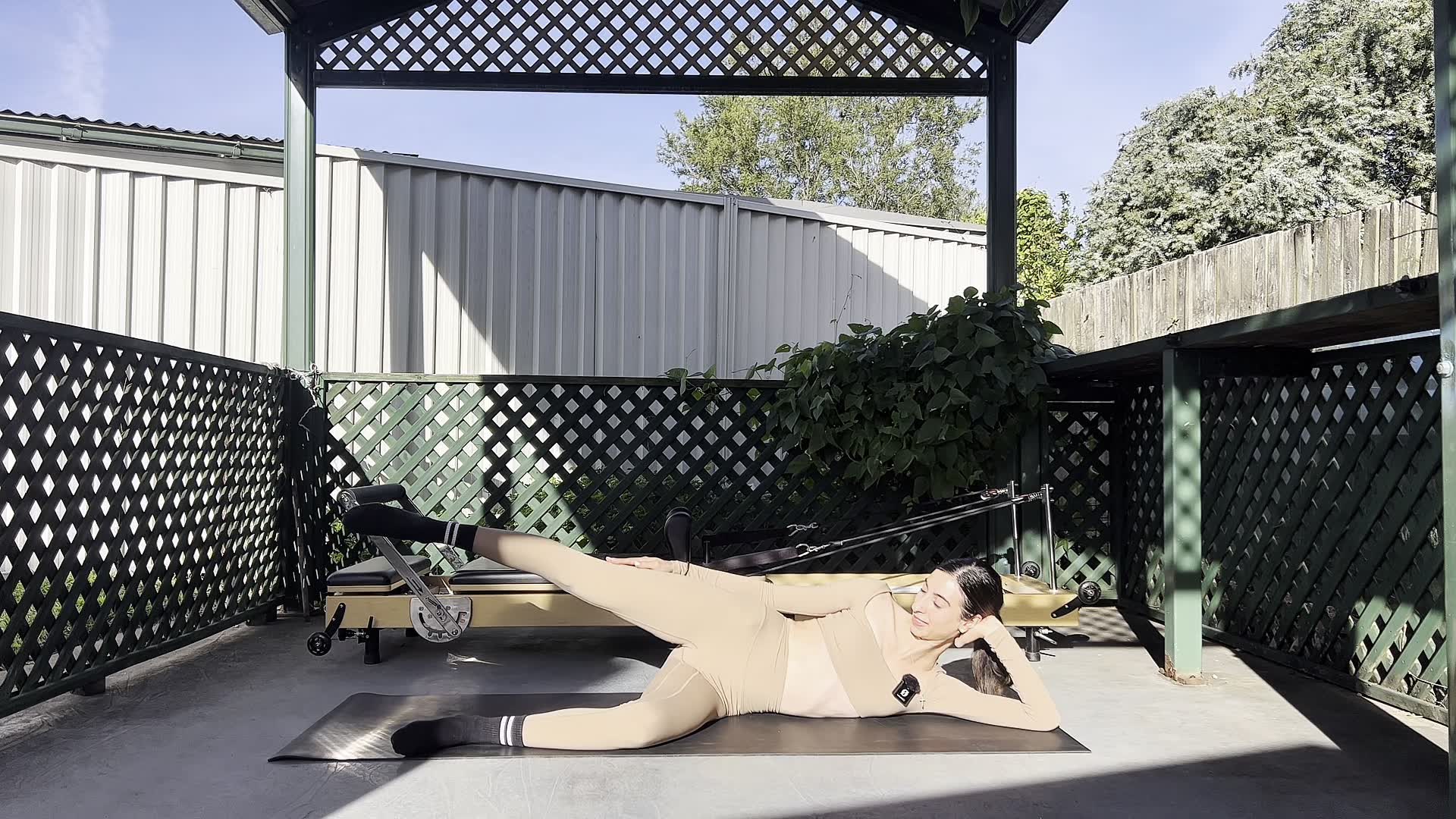
Pilates builds functional strength, posture and mobility without joint stress, and because it feels good rather than punishing, it is one of the most sustainable options to build a lasting habit around. New to it? Start with Pilates for beginners at home.
Walking
Regular walking supports cardiovascular health, mood and joint health with almost no impact. It pairs beautifully with Pilates as gentle movement on your rest days.
Swimming
Because the water carries your weight, swimming is an excellent option for anyone managing joint sensitivity or returning to movement after injury.
Yoga
Yoga improves flexibility and calms the nervous system, making it a wonderful companion to the core strength and control that Pilates develops.
Cycling
Cycling builds cardiovascular fitness and leg strength while sparing the joints the pounding of running, which makes it a great option for building stamina.
Barre
Barre builds muscular endurance and control through tiny, focused movements, sharing much of the precision and mindful quality that makes Pilates so effective.
I did not fall in love with Pilates because it was trendy. I fell in love with it because I finally found movement that made me feel stronger instead of smaller. One of my favourite things is finishing a session feeling capable and calm rather than defeated. That feeling, strong rather than broken, is exactly why I believe gentler training is here to stay.
The Benefits Go Beyond Fitness
Pilates is not designed to punish you, it is designed to support you. Every movement encourages better alignment, controlled breathing, functional strength and healthy movement patterns. That is why so many women notice changes that reach far beyond their fitness, and why the benefits of Pilates are worth reading in full.
Two of those deserve their own reading. For the desk related tightness, see Pilates for bad posture. For the stress and sleep side, Pilates for hormone health goes further.
What Changes When You Switch
Everyone moves at their own pace and none of these timings are promises, they are simply what women most often describe.
Everyday Habits That Grow Alongside Gentler Training
Something interesting happens once movement becomes enjoyable. The benefits rarely stay on the mat, they quietly ripple into the rest of your life.
-
Sleeping more deeply Movement that calms rather than overstimulates the nervous system helps many women fall asleep more easily and wake feeling genuinely rested.
-
Walking and moving more Feeling stronger and more mobile makes movement feel good, so you naturally start choosing to move more throughout the day.
-
Drinking more water Tuning into your body on the mat makes you more attuned to what it needs off it, and hydration is usually the first thing to improve.
-
Cooking nourishing meals Caring for your body through movement tends to spill into how you feed it. Explore the recipe collection, or read what to eat before and after Pilates for the timing side of it.
-
Managing stress intentionally The mindful breathing you practise in class becomes a tool you carry into the busy, overwhelming moments of everyday life.
A Simple Weekly Plan
You do not need long sessions to feel the difference, just a rhythm you can keep. Our Pilates class library includes sessions from 10 to 45 minutes, so a sustainable week like this is easy to build. For how often is enough, see can you do Pilates every day.
- MondayFull body Pilates, strength focus (20 to 30 min)
- TuesdayGentle walk or full rest
- WednesdayCore and posture Pilates (20 to 25 min)
- ThursdayRest or a short mobility session
- FridayStretch and flexibility Pilates (15 to 20 min)
- SaturdayShort energising flow, swim or cycle (15 min)
- SundayFull rest, nourish and recover
The 7 day free trial inside the membership gives you full access to the entire class library, with full body, core, posture and stretch sessions from 10 to 45 minutes, plus weekly schedules and the recipe collection. Everything you need to build strength sustainably, without the burnout. No reformer, no charge today. To read Melissa's story, visit the about page.
Frequently Asked Questions
Is Pilates considered a low impact workout?
Are low impact workouts effective for weight loss?
Can beginners start with low impact workouts?
Do low impact workouts really build strength?
Do I need equipment to do low impact workouts at home?
Is low impact better than the gym?
A note on health: This article is general information and is not medical advice. If you are pregnant or postnatal, returning to exercise after an injury or surgery, or managing an existing health condition, please check with your GP or physiotherapist before starting a new routine.
Sources and Further Reading
- Australian Government Department of Health, Disability and Ageing, movement recommendations for adults 18 to 64 years
- Australian Government Department of Health, Disability and Ageing, 24 hour movement guidelines for all Australians
- Australian Bureau of Statistics, Physical activity, National Health Survey
- Harvard Health Publishing, Pilates as an option for older adults