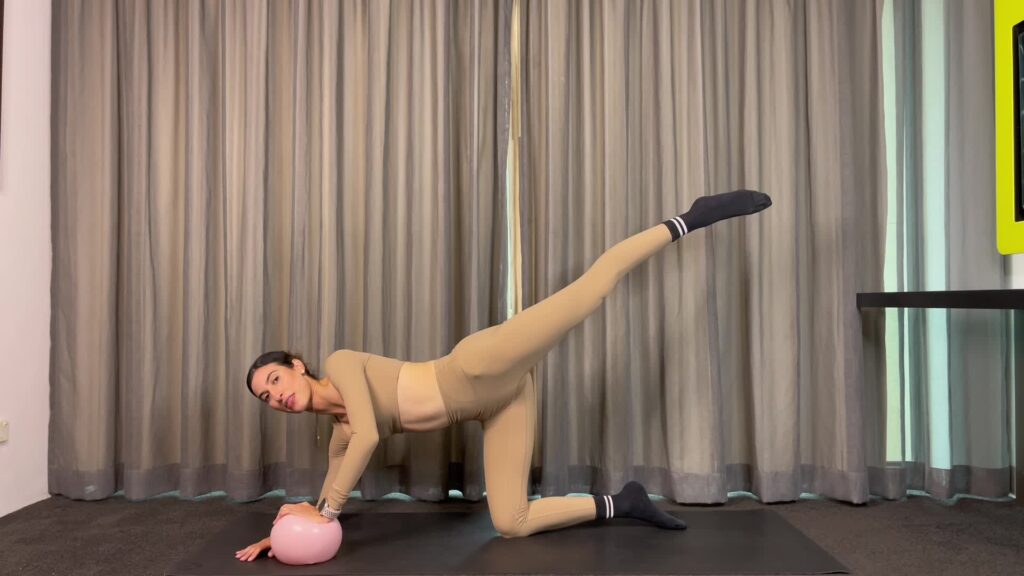
If you’ve ever wondered what Pilates does for your body, you’re not alone. Pilates is often described as “low-impact,” but don’t let that fool you. This form of movement works deeply, building strength, improving posture, and supporting your body in ways that go far beyond the mat.
Unlike workouts that focus only on burning calories or pushing intensity, Pilates trains your body to move better. Over time, the changes are subtle but powerful — stronger muscles, better alignment, less tension, and more control in everyday movement.
So, what exactly does Pilates do for your body? Let’s break it down.
What Pilates Does for Your Body at a Core Level
One of the most noticeable things Pilates does for your body is strengthen your core — and not just your abs.
Pilates targets the deep core muscles, including the transverse abdominis, pelvic floor, and muscles that support your spine. These muscles act like an internal support system, helping you move with stability and control.
When your core is strong:
- Your posture improves naturally
- Everyday movements feel easier
- Lower back discomfort is often reduced
- Balance and coordination improve
This is why Pilates is often recommended for long-term strength, not short-term results.
How Pilates Improves Posture and Alignment
Another key benefit of what Pilates does for your body is postural correction.
Modern life encourages poor posture — sitting, scrolling, driving, and working at desks. Pilates focuses on spinal alignment, shoulder positioning, and body awareness, helping you recognise and correct poor movement patterns.
Over time, Pilates helps:
- Lengthen tight muscles
- Strengthen postural muscles
- Reduce neck and shoulder tension
- Encourage a more upright, confident stance
Better posture doesn’t just look good — it reduces strain on joints and muscles, supporting your body long-term.
What Pilates Does for Muscle Tone (Without Bulk)
Pilates is known for creating lean, toned muscle rather than bulk.
Because Pilates uses controlled, precise movements and bodyweight resistance, it strengthens muscles evenly without overloading them. This results in a more balanced physique and improved muscle definition.
What Pilates does for your body in terms of tone:
- Builds long, lean muscle
- Improves muscle endurance
- Enhances full-body strength
- Supports functional movement
This makes Pilates ideal if you want to feel strong without feeling overworked or exhausted.
How Pilates Supports Joint Health and Mobility
Pilates is gentle on the joints while still being highly effective.
Movements are designed to flow through a full range of motion, which helps lubricate joints and maintain mobility. This is especially important as the body ages or if you’re returning to movement after time off.
Pilates supports:
- Joint stability
- Improved flexibility
- Reduced stiffness
- Lower injury risk
This is one of the reasons Pilates works well for beginners, athletes, and those recovering from injury when guided appropriately.
What Pilates Does for Your Body Mentally
The benefits of Pilates aren’t only physical.
Pilates combines breath with movement, encouraging focus and presence. This mind-body connection can help reduce stress, improve concentration, and support mental clarity.
Many people notice that Pilates:
- Reduces stress and tension
- Improves sleep quality
- Encourages body awareness
- Creates a sense of calm and control
What Pilates does for your body often starts in the mind — when stress lowers, movement feels easier and recovery improves.
What Pilates Does for Your Body Over Time (Not Just Short-Term Results)
One of the biggest misconceptions about Pilates is that it only creates surface-level change. In reality, what Pilates does for your body becomes more noticeable the longer you practice it.
In the first few weeks, most people feel stronger through their core and more aware of their posture. Over time, Pilates reshapes how your muscles work together. Instead of relying on dominant muscles (like hip flexors or shoulders), your body learns balance, control, and efficiency.
This is why Pilates doesn’t just change how your body looks — it changes how your body functions.
Unlike high-impact workouts that can stress joints and connective tissue, Pilates strengthens muscles in a way that supports longevity. Many people continue Pilates for years because it adapts as their body changes.
Can Pilates Change Your Body Shape?
Pilates doesn’t promise overnight transformation — and that’s a good thing.
What Pilates does for your body is gradual and sustainable. Over time, many people notice:
- Improved muscle definition
- Better posture changing their overall shape
- A stronger, more supported core
- Less bloating and tension
Rather than forcing change, Pilates allows your body to adapt naturally through consistency.
How Long Does It Take to Feel the Effects of Pilates?
This is one of the most common questions.
With consistent practice, many people feel changes within a few weeks:
- Improved posture
- Better core engagement
- Increased flexibility
- Reduced aches and stiffness
Visible changes may take longer, but the internal improvements — how your body feels and moves — often come first.
Why Pilates Works Long Term
What makes Pilates different from many workouts is sustainability.
Pilates meets your body where it is. Some days you move strongly, other days more gently. This adaptability is why Pilates becomes a long-term practice rather than a short-lived routine.
What Pilates does for your body over time is build resilience — physically and mentally.
What Pilates Does for Your Core, Posture, and Spine
A huge part of what Pilates does for your body comes down to spinal health and core control.
Pilates trains the deep stabilising muscles that support your spine, including the transverse abdominis, pelvic floor, and multifidus muscles. These muscles don’t get much attention in traditional workouts, but they’re essential for:
- Standing taller without effort
- Reducing lower back discomfort
- Improving balance and coordination
- Supporting everyday movements like lifting and bending
Over time, many people notice that Pilates improves posture naturally — not because they’re forcing it, but because their body is strong enough to hold itself upright.
This is one reason Pilates is often recommended by physiotherapists and movement specialists as a supportive form of exercise.
What Pilates Does for Your Muscles (Without Bulking)
One of the most common questions people ask is whether Pilates will make them bulky. The short answer is no — and understanding why explains a lot about what Pilates does for your body.
Pilates focuses on eccentric strength, controlled lengthening, and muscle endurance rather than heavy loading. This creates long, lean muscle tone instead of size-driven hypertrophy.
What Pilates does for your muscles includes:
- Strengthening without shortening muscles
- Creating balanced muscle development
- Reducing overuse in dominant muscle groups
- Improving muscle endurance rather than fatigue
This is why many people notice a more sculpted appearance without feeling tight or restricted. Pilates encourages muscles to work together rather than overpower one another.
What Pilates Does for Your Body as You Age
Pilates is often associated with aesthetics, but one of its most powerful benefits is longevity.
As we age, muscle mass, balance, and mobility naturally decline. What Pilates does for your body is slow that process down — and in many cases, reverse it.
Regular Pilates practice supports:
- Balance and coordination
- Fall prevention through core and joint stability
- Maintenance of muscle tone
- Joint health and spinal mobility
Because Pilates is low-impact and adaptable, it’s a form of movement people can maintain for decades. This makes it less of a trend and more of a long-term investment in how your body functions.
What Pilates Does for Your Breathing and Circulation
Breathing is central to Pilates — and it’s not just about relaxation.
Pilates uses intentional breathing patterns that support oxygen flow, core engagement, and nervous system regulation. Over time, this improves how efficiently your body uses oxygen during both exercise and daily life.
What Pilates does for your body through breathwork includes:
- Improved lung capacity
- Better circulation and oxygen delivery
- Reduced tension in the neck and shoulders
- Support for stress regulation
Many people notice they breathe more deeply outside of class — during work, walking, or even resting — which contributes to better energy levels overall.
What Pilates Does for Your Body Compared to High-Impact Workouts
High-impact workouts can deliver fast results, but they often come at a cost.
What Pilates does for your body is provide a low-impact alternative that still builds strength, stability, and endurance — without excessive joint stress.
Unlike jumping or heavy lifting-based workouts, Pilates:
- Protects joints while strengthening them
- Encourages recovery rather than depletion
- Reduces inflammation risk
- Supports long-term consistency
This makes Pilates an ideal complement to other training styles — or a complete practice on its own.
Why Consistency Matters More Than Intensity in Pilates
One of the biggest reasons Pilates works is because it’s sustainable.
What Pilates does for your body compounds over time. Small, consistent sessions create better results than infrequent intense workouts.
Even short sessions:
- Reinforce neuromuscular patterns
- Maintain joint mobility
- Support posture and alignment
- Prevent regression
This is why Pilates is often described as something you practice, not just something you do.
The Bigger Picture: What Pilates Does for Your Body and Lifestyle
Pilates strengthens your body from the inside out.
It improves posture, builds core strength, enhances mobility, and supports mental wellbeing — all without exhausting your system. Instead of pushing your body harder, Pilates teaches it to move smarter.
If you’re looking for movement that supports your body long-term, Pilates isn’t just a workout — it’s a foundation.
According to Healthline’s research-backed overview of Pilates benefits, consistent Pilates practice improves posture, core strength, and body awareness, making it especially effective for long-term musculoskeletal health.
Link to: https://www.healthline.com/nutrition/pilates-benefits