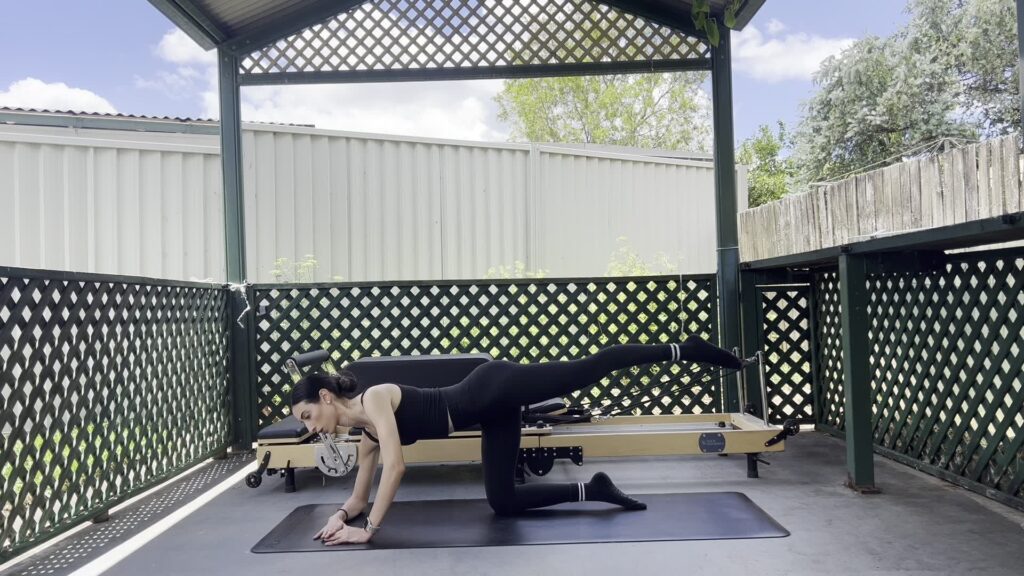
If you’re new to Pilates or even a few months into your practice, you’ve probably heard instructors talk about “the principles” or “the rules.” But what does that actually mean?
So, what are the 6 rules of Pilates?
They are the foundational principles that guide every Pilates movement — helping you move with intention, control, and efficiency rather than rushing through exercises. These rules are what separate Pilates from regular workouts and are the reason it delivers such lasting results.
The six rules of Pilates are:
- Concentration
- Control
- Centering
- Precision
- Breath
- Flow
Let’s break each one down and explain how they work together.
Why the 6 Rules of Pilates Matter
Before diving into each rule, it’s important to understand why they exist.
Pilates isn’t about burning calories as fast as possible or pushing through fatigue. It’s about training the body to move better, feel stronger, and stay balanced long-term.
The six rules of Pilates:
- Improve posture and alignment
- Build deep, functional strength
- Reduce injury risk
- Increase body awareness
- Support consistency over time
These rules apply whether you’re doing Pilates at home, in a studio, or through online Pilates classes.
Rule 1: Concentration
The first answer to “what are the 6 rules of Pilates” is concentration.
Pilates requires full mental focus. Every movement is intentional, and every exercise asks you to stay present in your body.
Instead of zoning out or rushing reps, concentration means:
- Paying attention to how your body moves
- Noticing muscle engagement
- Staying aware of alignment and breath
This mental engagement is one of the biggest reasons Pilates improves posture and coordination so effectively. When your mind is involved, your body learns faster.
Rule 2: Control
Control is one of the most important rules of Pilates.
Every movement in Pilates is controlled — not momentum-driven. You’re not throwing your limbs or rushing through exercises. You’re guiding your body with precision.
Control helps:
- Protect joints
- Strengthen stabilising muscles
- Prevent injury
This rule is why Pilates feels challenging even without heavy equipment. Slow, controlled movement requires deep strength and awareness.
Rule 3: Centering
When people ask, “what are the 6 rules of Pilates?”, centering is often the one they hear about most.
Centering refers to the core, sometimes called the “powerhouse” in Pilates. This includes:
- Abdominals
- Lower back
- Pelvic floor
- Glutes
Every Pilates movement begins from the center. Instead of relying on limbs alone, the core supports and initiates movement.
This focus on centering is what gives Pilates its reputation for building strong cores and improving stability in everyday life.
Rule 4: Precision
Precision is about quality over quantity.
In Pilates, fewer well-executed movements are more effective than dozens of sloppy reps. Precision ensures that each exercise targets the correct muscles without compensation.
Practicing precision helps:
- Improve muscle balance
- Correct posture imbalances
- Increase movement efficiency
This rule is especially helpful for beginners, because it encourages learning proper form from the start.
Rule 5: Breath
Breath is a core rule of Pilates — not an afterthought.
Pilates uses intentional breathing to:
- Support core engagement
- Improve oxygen flow to muscles
- Enhance focus and control
Unlike everyday shallow breathing, Pilates encourages deep, controlled breaths that work with movement rather than against it.
Proper breathing also helps reduce tension in the neck and shoulders, making workouts feel more fluid and sustainable.
Rule 6: Flow
The final answer to “what are the 6 rules of Pilates” is flow.
Flow refers to how movements transition smoothly from one to the next. Pilates exercises are designed to connect, creating rhythm and continuity rather than stop-start motion.
Flow:
- Improves coordination
- Builds endurance without exhaustion
- Makes workouts feel more natural
When flow is present, Pilates feels less like a list of exercises and more like a moving practice.
How the 6 Rules of Pilates Work Together
Each rule is powerful on its own, but the real magic happens when they work together.
For example:
- Concentration improves precision
- Control supports flow
- Breath enhances centering
Together, the six rules of Pilates create a system that trains the body holistically rather than in isolated parts.
This is why Pilates feels different from traditional workouts — and why results tend to last.
Applying the 6 Rules of Pilates at Home
You don’t need a studio to apply the six rules of Pilates.
When practicing Pilates at home:
- Move slowly and deliberately
- Focus on breath and alignment
- Choose quality over duration
Online Pilates classes are especially helpful because they guide you through these principles, helping you stay connected to proper form even without in-person correction.
Common Mistakes When Learning the 6 Rules of Pilates
Many beginners struggle with:
- Rushing movements
- Holding their breath
- Overworking surface muscles instead of the core
These are normal learning curves. Pilates is a skill, not just a workout, and mastery comes with consistency and awareness.
How the 6 Rules of Pilates Improve Everyday Movement
One of the most underrated benefits of understanding what the 6 rules of Pilates are is how much they carry into daily life.
Pilates is not just about what happens on the mat. The principles teach your body how to move better everywhere else.
When you apply concentration and control, you become more aware of posture while sitting, standing, or walking. Centering supports your spine when lifting groceries, picking up children, or spending long hours at a desk. Precision helps reduce unnecessary strain, while breath regulates tension during stressful moments.
Over time, the six rules of Pilates train your body to move efficiently without conscious effort. This is why many people report fewer aches, better posture, and improved balance even outside of workouts.
Why the 6 Rules of Pilates Are Especially Important for Beginners
Beginners often think Pilates is about flexibility or core strength alone. In reality, the six rules of Pilates are what make the practice safe and effective from day one.
For beginners:
- Concentration prevents rushing
- Control reduces injury risk
- Centering builds foundational strength
- Precision avoids compensation
- Breath prevents tension
- Flow encourages confidence
Without these principles, Pilates can feel confusing or ineffective. With them, even short sessions deliver noticeable benefits.
This is why beginner Pilates programs place so much emphasis on slow pacing and verbal cues — they are teaching the rules, not just the exercises.
Advanced Pilates and the Role of the 6 Rules
As strength and confidence increase, the six rules of Pilates become even more important — not less.
Advanced exercises demand:
- Greater control through full ranges of motion
- Deeper core engagement
- More refined breath coordination
- Seamless flow between movements
At higher levels, Pilates is not about doing harder exercises for the sake of difficulty. It is about executing complex movements with clarity and precision.
This is where the six rules of Pilates separate Pilates from general fitness training.
The Science Behind the 6 Rules of Pilates
Research supports many of the principles behind Pilates.
Studies have shown that Pilates improves:
- Core strength and stability
- Postural alignment
- Balance and coordination
- Body awareness and neuromuscular control
These benefits directly reflect the six rules of Pilates. When movement is controlled, precise, and breath-led, the nervous system learns efficient patterns that carry into daily activity.
This is why Pilates is often recommended in rehabilitation, injury prevention, and long-term wellness programs.
How the 6 Rules of Pilates Reduce Injury Risk
One of the biggest advantages of Pilates is its low injury rate — and the six rules are the reason why.
By emphasising:
- Control over momentum
- Alignment over force
- Quality over quantity
Pilates protects joints and connective tissue while still building strength.
Many injuries occur when the body compensates or moves under fatigue. Pilates trains awareness before fatigue sets in, reducing risky movement patterns.
For people returning to exercise after injury, the six rules of Pilates provide structure and safety without intimidation.
Applying the 6 Rules of Pilates to Short Workouts
You do not need long sessions to benefit from Pilates.
Even 10–20 minute workouts can be effective when the six rules of Pilates are applied correctly.
In short sessions:
- Concentration keeps movements intentional
- Precision maximises results
- Breath supports efficiency
- Flow maintains rhythm without rushing
This makes Pilates ideal for busy schedules and at-home routines, where consistency matters more than duration.
Common Myths About the 6 Rules of Pilates
There are a few misconceptions that often come up when people learn about the six rules of Pilates.
Myth 1: Pilates is only slow stretching
Pilates builds deep strength through controlled movement.
Myth 2: You need perfect form immediately
Pilates is about progress, not perfection. Awareness develops over time.
Myth 3: Pilates is only for flexibility
Strength, stability, coordination, and posture are central outcomes.
Understanding the six rules helps clear up these myths and reframes Pilates as a structured movement system rather than a trend.
How the 6 Rules of Pilates Support Long-Term Consistency
Consistency is where most fitness routines fail.
The six rules of Pilates encourage:
- Listening to your body
- Adjusting intensity as needed
- Staying connected rather than pushing blindly
This makes Pilates sustainable across seasons of life — busy weeks, low-energy days, and recovery periods.
When workouts feel supportive rather than punishing, they are far easier to maintain long term.
Teaching the 6 Rules of Pilates in Online Classes
Online Pilates classes are uniquely suited to teaching the six rules of Pilates when structured correctly.
Clear verbal cues help guide:
- Breath timing
- Core engagement
- Alignment awareness
Because Pilates is not equipment-heavy, the principles translate well to at-home practice. Many people find they learn the rules more deeply when practicing in a calm, familiar environment.
How to Know If You Are Applying the 6 Rules of Pilates Correctly
You may be applying the six rules of Pilates correctly if:
- Movements feel controlled rather than rushed
- You can breathe smoothly throughout exercises
- Muscles feel worked without joint discomfort
- You finish sessions feeling energised rather than depleted
Pilates should challenge you, but it should not leave you exhausted or sore in unhealthy ways.
Why the 6 Rules of Pilates Make Results Last
Quick fitness programs often produce fast results — and fast burnout.
The six rules of Pilates focus on building a strong foundation. Strength developed through control, precision, and breath lasts longer because it is functional and balanced.
This is why many people who practice Pilates regularly report improvements years into their practice rather than plateaus.
Final Reflection: The Value of the 6 Rules of Pilates
Understanding what the 6 rules of Pilates are transforms how you move, train, and recover.
They are not restrictions. They are tools.
When applied consistently, the six rules of Pilates create a practice that supports:
- Strength without strain
- Movement without fear
- Progress without burnout
This is what makes Pilates more than a workout — it becomes a long-term movement practice that adapts with your body.
Final Thoughts: What Are the 6 Rules of Pilates?
So, what are the 6 rules of Pilates?
They are the foundation of the practice:
- Concentration
- Control
- Centering
- Precision
- Breath
- Flow
Together, these principles create strength that is balanced, sustainable, and functional.
If you focus on these rules, Pilates becomes more than exercise — it becomes a way to move better, feel stronger, and support your body long-term.